Pilates is one of the most versatile and clinically respected forms of exercise available. Whether you are recovering from an injury, managing back pain, training as an athlete, or simply looking to build strength and mobility, Pilates delivers results that most other exercise formats cannot replicate.
At Inspire Physiotherapy in Prudhoe, we run Pilates classes for all fitness levels, including rehabilitation-focused sessions for patients recovering from injury. Here are five benefits we see in our patients consistently, and why we recommend Pilates to such a wide range of people.
1. Improve Your Core Stability
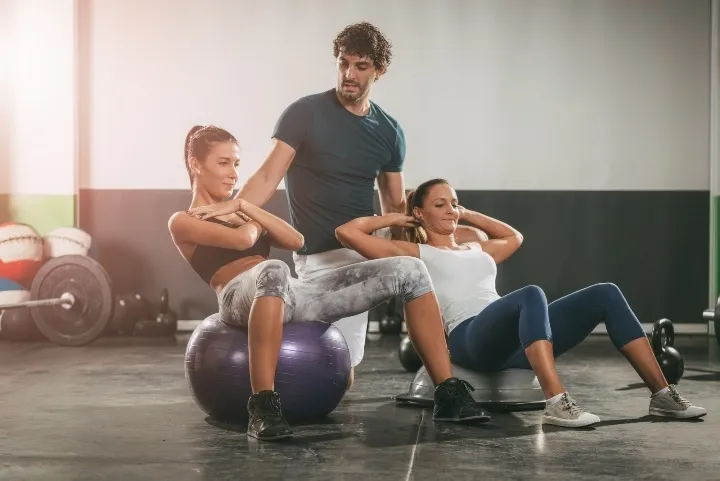
A strong core offers us so many benefits in our daily lives. It is one of the top Pilates exercise benefits, and will help you to stay injury free and gain overall strength in the future. Pilates classes incorporate gentle abdominal exercises, encouraging you to engage the deep core muscles in a way that many other types of exercise don’t. A Pilates exercise class won’t necessarily leave you sweating like many other types of exercise, but the deep work you’ll do on your core will offer you a range of overall health benefits that will serve you well at any stage of your life.
The deep core muscles targeted in Pilates include the transverse abdominis, multifidus, and pelvic floor. These are the muscles that wrap around the spine and pelvis like a natural corset, and they are almost entirely ignored by conventional gym exercises such as sit-ups and crunches, which primarily work the superficial rectus abdominis.
When these deep stabilising muscles are weak, the spine becomes reliant on larger, less precise muscle groups to compensate. This leads to inefficient movement patterns, muscle imbalances, and over time, an increased risk of back pain, hip pain, and lower limb injuries.
Research consistently shows that core stability training based on Pilates principles is one of the most effective long-term strategies for reducing chronic lower back pain. At Inspire Physiotherapy, we use Pilates-based core rehabilitation as part of our treatment programmes for patients with back pain, hip problems, and post-surgical recovery.
2. Correct Your Posture
One of the basic elements that’s covered in any Pilates class is your posture. Good posture helps us in every aspect of our lives, from looking taller and more confident to reducing the chance of lower back pain as we age. So many of us spend all day now hunched over a computer, which can lead to a curved spine and poor neck placement. The gentle techniques used in Pilates allow you to focus on your posture during each exercise, which is why this is one of the best Pilates exercise benefits. The sooner you start Pilates exercise, the less likely you’ll find yourself with back and spine issues as you enter the later stages of your life.
Poor posture is not just an aesthetic problem. When the thoracic spine rounds forward and the head protrudes, it compresses the cervical discs, shortens the chest muscles, and overstretches the muscles between the shoulder blades. Over time this leads to neck pain, shoulder impingement, and tension headaches.
Pilates addresses posture from the ground up. Each exercise reinforces the concept of neutral spine alignment, teaches you to retract and depress the shoulder blades, and strengthens the muscles responsible for holding the spine upright without effort. The improvements in posture that come from consistent Pilates practice carry over directly into your daily life, reducing the chronic muscular strain that builds up during long hours at a desk.
This is particularly relevant for office workers, drivers, and anyone who spends extended time in a seated position.
3. Support Your Mental Health and Reduce Stress
The mental health benefits of Pilates are well recognised. The deliberate, controlled breathing patterns used throughout every Pilates exercise activate the parasympathetic nervous system, which is the body’s rest and recovery state. This directly counters the physical effects of stress, reducing cortisol levels and promoting a sense of calm.
Unlike high-intensity exercise classes where the pace and noise can add to mental fatigue, Pilates requires focused concentration on precise movement. This acts as a form of active mindfulness, giving your mind a break from daily pressures without requiring you to sit still. Many of our patients report that their Pilates session is the one hour a week where they genuinely switch off.
For patients recovering from injury, this mental health aspect is especially important. Being unable to train at your normal intensity can have a significant psychological impact. Pilates keeps you moving, gives you a sense of progress, and reduces the anxiety that often accompanies a long recovery period.
4. Support Injury Recovery and Rehabilitation
When we are asked about what are the benefits of Pilates exercise, we often recommend this form of workout to anyone who is going through rehab for an injury. We know that you might not be able to get back to your usual running or gym workouts, but Pilates allows you to still keep moving and retain some of your muscle while recovering from any injury. If you can’t stand on your legs for an extended period of time, you can enjoy a Pilates class that focuses on mat work. The good thing about Pilates is that it can be adapted to any fitness level or injury, so that everyone can enjoy an effective workout at any stage in their life.
At Inspire Physiotherapy, we incorporate Pilates-based exercises directly into our rehabilitation programmes for a wide range of injuries including lower back pain, hip and knee problems, shoulder injuries, post-surgical recovery, and chronic pain conditions.
The reason Pilates is so effective in rehabilitation is its focus on controlled, low-load movement. Rather than forcing a painful joint through a large range of motion, Pilates allows the physiotherapist to begin rebuilding strength and motor control at a level the body can manage, then progress gradually as recovery advances.
For patients recovering from spinal surgery, hip replacement, or knee reconstruction, mat-based Pilates provides a safe way to rebuild functional movement before progressing to more demanding exercises. For anyone with a chronic overuse injury, the muscle balance work in Pilates addresses the underlying weaknesses that caused the injury in the first place.
5. Suitable for All Fitness Levels and Ages
If it’s been a long time since you last worked out, we know how daunting it can be to think about going to a group workout class. One of the things we love about Pilates is that it really is suitable for everyone. You’ll find classes to fit all levels, from basic mat-based classes for beginners through to reformer Pilates for those who are more advanced. As you progress, we can offer you different variations and challenges, so each class will continue to be of interest to you week after week. Pilates is used by many professional athletes to keep their body in top condition between other training sessions, and it’s the perfect addition to any workout routine.
This is something we see clearly in our Pilates classes at Inspire Physiotherapy in Prudhoe. In a single class you might have a 25-year-old runner working on hip stability, a 50-year-old managing back pain, and a 70-year-old building balance and bone density after a fall. All three can work effectively in the same class environment because Pilates exercises can be modified in real time to suit the individual.
For older adults in particular, Pilates delivers benefits that go beyond fitness. Regular Pilates practice improves preconception (the body’s sense of its position in space), which directly reduces the risk of falls. It also maintains the joint mobility and muscle length that tends to reduce with age, allowing older adults to remain active and independent for longer.
If you have not exercised for a long time, are returning from illness, or have been told by a doctor to avoid high-impact activity, Pilates is one of the most appropriate starting points available.
What to Expect at Our Pilates Classes in Prudhoe
Our Pilates classes at Inspire Physiotherapy are run by qualified practitioners who understand the relationship between exercise, movement quality, and injury prevention.
- Class sizes are kept small so that every participant receives individual attention and corrections throughout the session. This is very different from a large gym-based Pilates class where technique often goes unchecked.
- We offer mat-based Pilates classes suitable for beginners through to intermediate level. Sessions typically run for 45 to 60 minutes and focus on core strength, postural alignment, breathing, and controlled movement.
- Rehabilitation-focused sessions are available for patients who are recovering from injury or managing a chronic condition. These are coordinated with your physiotherapy treatment plan to ensure the exercises complement your recovery programme.
- No experience is necessary. Our instructors will guide you through the fundamentals in your first session and adapt exercises to your current ability level.
To find out about current class times and availability, call us on 01661 898148 or email reception@inspirephysiotherapy.co.uk.
Frequently Asked Questions About Pilates
1. Is Pilates good for back pain?
Yes. Pilates is one of the most evidence-supported exercise approaches for chronic lower back pain. It strengthens the deep stabilising muscles of the spine and pelvis, improves postural alignment, and teaches movement patterns that reduce strain on the lower back during daily activities. We regularly prescribe Pilates-based exercises as part of our back pain rehabilitation programmes at Inspire Physiotherapy.
2. How often should I do Pilates to see results?
Most people begin to notice improvements in core strength, posture, and flexibility within 4 to 6 weeks of attending one to two classes per week. Consistency matters more than frequency in the early stages. As your technique and strength develop, you may find that two to three sessions per week produces faster progress.
3. Can I do Pilates if I have an injury?
In most cases, yes. Pilates can be adapted to work around most injuries and is frequently used as part of structured rehabilitation. If you are currently receiving physiotherapy at our Prudhoe clinic, speak to your physiotherapist about incorporating Pilates into your recovery plan.
4. What is the difference between mat Pilates and reformer Pilates?
Mat Pilates uses your own body weight as resistance and requires no equipment, making it accessible to complete beginners. Reformer Pilates uses a specialised piece of equipment with a sliding carriage and spring resistance system, allowing for a wider range of exercises and greater progression. We recommend starting with mat Pilates to build foundational strength and technique before progressing to reformer work.
5. Do I need to be fit to start Pilates?
No. Pilates is specifically designed to be accessible regardless of current fitness level. Our classes in Prudhoe welcome complete beginners, people returning from injury, and older adults. Every exercise can be modified to suit your starting point.
As you can see, there are so many benefits of Pilates, which is why people from around the world trust this type of exercise on a weekly basis. No matter your current fitness levels or what type of exercise you usually enjoy doing, you’ll find that Pilates will be a great addition to any workout routine. Our team will help to suggest the best class or type of Pilates for your unique needs, and we can tailor classes to fit anyone who is recovering from an injury. Get in touch today to learn more about our Pilates classes or to discuss any questions you have about this form of exercise.